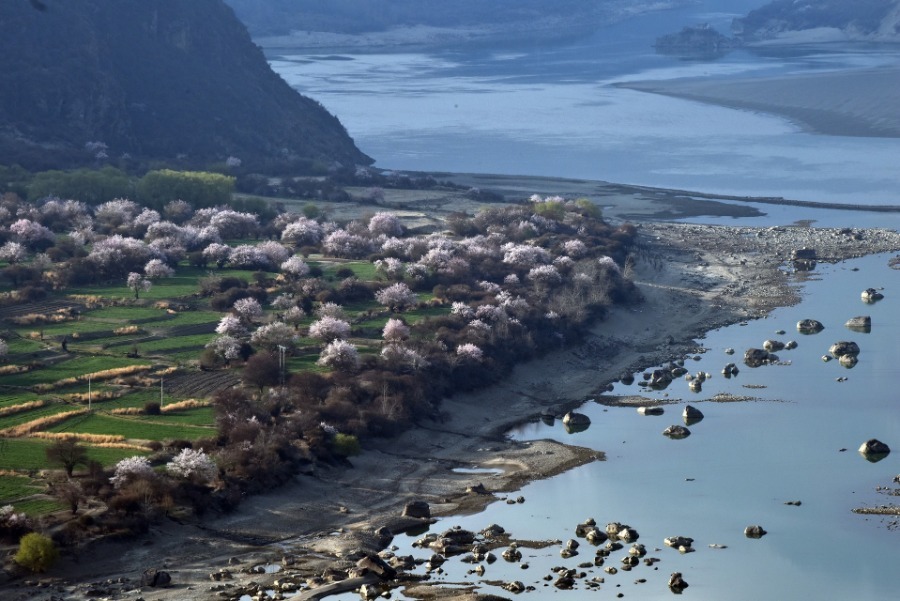
Yarlung Zangbo River
Introduction
The Yarlung Zangbo River, known for its breathtaking landscapes and rich cultural significance, is a major river in the Xizang autonomous region of China.
Geography and Course
The Yarlung Zangbo River stretches approximately 2,900 kilometers, making it one of the longest rivers in Asia. It begins from the Angsi Glacier in the western part of Xizang, at an altitude of around 5,300 meters. The river runs eastward across the Tibetan Plateau, which is often referred to as "the roof of the world" due to its high elevation and extensive mountain ranges.
As it flows through Xizang, the river is known for carving the Yarlung Zangbo Grand Canyon, the deepest canyon in the world, with depths reaching up to 6,009 meters. This natural wonder is a significant geographical feature, renowned for its dramatic landscapes that include a diverse range of ecosystems and snow-capped peaks like Namcha Barwa.
Biodiversity and Ecosystems
The Yarlung Zangbo River basin hosts a rich diversity of flora and fauna, owing to its varied climatic zones and elevations. The river's upper reaches are characterized by alpine ecosystems, home to species such as the snow leopard and Tibetan antelope. As the river descends, it passes through temperate forests and subtropical zones, supporting a wide range of plant and animal life.
The Yarlung Zangbo Grand Canyon is particularly noted for its unique biodiversity. The steep gradients and varied microclimates within the canyon create habitats for numerous endemic species. Conservation efforts are ongoing to protect this biodiverse region from the impacts of climate change and human activities.
Tourism and Development
The Yarlung Zangbo River and its surrounding landscapes are a major draw for tourists seeking adventure and cultural experiences in Xizang. Activities such as trekking, rafting, and wildlife observation are popular in the area. The grand vistas of the canyon and the cultural richness of nearby monasteries attract visitors from around the globe.
Infrastructure development in the region, such as improved roads and transportation links, has facilitated increased access for tourists. However, there is also a focus on sustainable tourism to ensure that the natural and cultural heritage of the Yarlung Zangbo River is preserved for future generations.








